What Makes a Premium Cigar Band? 3 Design Lessons from Plasencia Alma del Fuego
Walk past a humidor full of cigars and one band will stop you. It isn’t the most ornate, the most gilded, or the most expensive-looking. It’s the one that knows what it wants to say — and refuses to say a word more.
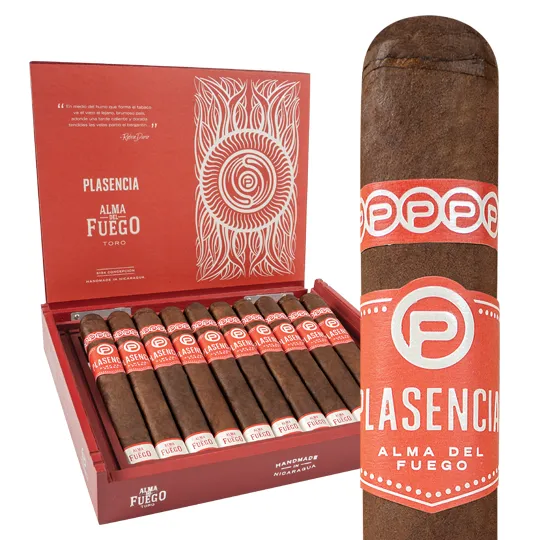
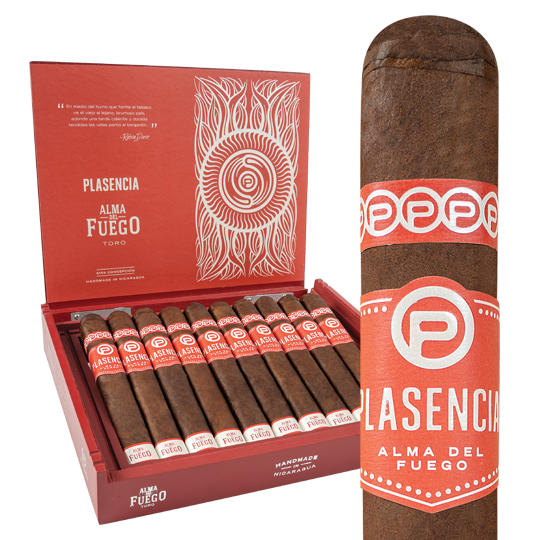
That band is Plasencia’s Alma del Fuego. Bright coral red where every other premium cigar band leans black-and-gold. A single white “P” monogram where most brands cram a paragraph. A repeating pattern that catches the light. Pick it up — it’s textured. Foiled. Embossed. Tactile. The kind of band that earns a second look from across a room and a third look in your hand.
It’s also a master class in premium cigar band design — one that anyone considering a custom band for their own brand should study. Three deliberate choices. One unmistakable signal. Here’s what Plasencia Alma del Fuego teaches us about what makes a great cigar band, and how to apply the same principles to your own.
Why Cigar Band Design Matters More Than You Think
A cigar band is the smallest piece of real estate in your entire brand — and the most powerful. It is the only piece of packaging a customer sees while the product is being enjoyed. The wrapper goes to the ash tray. The cellophane is in the trash. The box is on a shelf at home. But the band? The band travels. It sits between two fingers at a wedding, at a closing dinner, at a poker game. It gets photographed. It gets pointed at. It gets remembered.
And yet most custom cigar bands look like they were designed by committee. Logos compete with country-of-origin marks. Vintages fight with blend codes. Decorative borders distract from the name. The result is a band that says everything and signals nothing.
The bands that actually move cigars do the opposite. They reduce. They focus. They commit to a single signal and execute it with confidence. Plasencia Alma del Fuego is one of the cleanest modern examples in the humidor.
A Case Study in Restraint: Plasencia Alma del Fuego
Released in the Alma family of Plasencia’s premium portfolio, the Alma del Fuego is a box-pressed Nicaraguan with a Jalapa Sun Grown wrapper and Ometepe-aged binders and fillers. Inside the leaf, it’s a master blender’s cigar. Outside, it’s a master designer’s cigar.
The band system has three components — a primary band carrying the “P” monogram and the cigar’s name, a smaller foot band repeating the P in tight succession, and a head detail that mirrors the foot. Every piece is bright coral red with white type. No gold. No metallic flourishes. No filigree. The reduction is the design.
Three lessons sit inside that reduction. Each one is a design principle you can lift directly and apply to a custom cigar band for your own brand.
Lesson 1 — One Letter, Said with Confidence
Chanel does it with two C’s. Louis Vuitton with an LV. Hermes with an H. Plasencia does it with a single, geometric P. A monogram works because the brand has earned the right to be recognized without explanation.
Most custom cigar bands hedge. The family name, the country of origin, the vintage year, the blend code, the wrapper notation — all crammed onto a strip of paper that’s smaller than a business card. The strongest cigar bands whisper one thing, loud.
The monogram principle works for two reasons. First, it makes the band recognizable at distance. A smoker across the lounge can identify your brand before they can read your brand. Second, it forces the rest of the design to support that one mark, which means every other element has to earn its place. Restraint isn’t the absence of design — it’s the discipline of design.
When a Monogram Works for a Cigar Brand
A monogram is the right play if your brand has a strong founder identity (initials of the founder), a memorable letterform that can be drawn cleanly at small sizes, or a single word brand that compresses naturally. It’s the wrong play if your brand name is long, if the initials are visually awkward, or if your mark doesn’t read at 8mm height (the average height of a primary cigar band).
If you’re not ready for a single-letter monogram, the next-best play is a tight wordmark in a custom typeface — one carefully drawn letterform repeated across all your bands. Padron does this. Davidoff does this. Cohiba does this. The principle is the same: identity through repetition of a singular mark.
Lesson 2 — Pattern Is a Luxury Cue
Look at the secondary band at the foot of the Alma del Fuego — a tight repetition of that same P. It mirrors how heritage luxury houses extend a logo into a canvas pattern. Monograms become fabric. Fabric becomes identity. Louis Vuitton’s monogram canvas, Gucci’s GG pattern, Bottega’s woven intrecciato — all the same principle, applied across product lines for decades.
The repeat does two things on a cigar band. First, it signals confidence. A brand that puts its mark down once is saying “here we are.” A brand that puts it down five times in a row is saying “we don’t need to convince you.” Second, it gives the eye somewhere to dwell. When a customer holds the cigar between two fingers, the band turns. Pattern keeps the design visually active without requiring more information.
Designing a Repeat Pattern for Your Cigar Brand
The pattern doesn’t have to be the monogram. It can be a hatch, a wave, an asterisk, a geometric tile. What matters is consistency and rhythm. The pattern should sit on a secondary band or a footer strip, not on the primary band — otherwise it fights with your main mark. And it should be foiled or embossed for tactile reinforcement (more on that below).
Beware the most common mistake here: filler ornament. A swirl, a flourish, a generic decorative element pulled from a stock vector library. Heritage patterns work because they’re branded. Stock filigree works against you because it makes your band look like every other cigar band in the humidor.
Lesson 3 — Texture You Can Feel: Foiled and Embossed Finishes
This is the lesson that most brands underestimate. The Plasencia Alma del Fuego band is foiled and embossed — the foil gives it a subtle metallic catch, and the emboss raises specific elements (the P, the type, the border) so they can be felt with the fingertips. The eye reads the band first. The hand reads it next.
Smooth, flat-printed bands feel like packaging. Embossed bands feel like jewelry. That tactile difference is what your customer remembers a week later, when they describe your cigar to a friend. Not the wrapper notes. Not the country of origin. The way the band felt between their fingers.
Foiled and Embossed Cigar Bands — What They Actually Are
A foiled cigar band uses metallic foil stamping — usually gold, silver, copper, or a custom-mixed color — applied under heat and pressure to specific elements of the design. Foil reflects light, so the band changes appearance as the cigar rotates. An embossed cigar band uses a metal die to raise (or recess, in the case of debossing) elements off the paper, creating physical relief. The two techniques are almost always combined on premium bands — foil for visual depth, emboss for tactile depth.
The cost difference between a foiled-and-embossed band and a flat-printed band is meaningful but not enormous — typically 30 to 60 percent more depending on volume and complexity. The perceived value difference is exponential. A customer paying $15 for a stick with a flat-printed band feels they paid retail. A customer paying $15 for a stick with a foiled and embossed band feels they got a deal.
How to Apply These Lessons to Your Own Cigar Brand
If you’re designing a band for a new cigar line — or thinking about redesigning the one you have — here’s how the three lessons translate into a practical brief.
Start with the mark. Before you think about the band, think about the single most important element of your brand — the logo, the initial, the wordmark. If it can’t carry the design on its own, the design will lean on decoration and lose. Refine the mark until it can stand alone.
Pick one signal. Cigar bands fail when designers try to communicate three or four things equally. Pick the one signal you want the band to send — heritage, craft, modernity, exclusivity, accessibility — and design everything else to support it. Everything else means typography, color palette, border treatment, paper finish.
Commit to texture. Foiled and embossed isn’t a finishing touch — it’s a load-bearing design choice. If your brand is positioning premium, your band has to feel premium in the hand. The difference between a flat band and an embossed band is felt before it’s seen, and it’s the single biggest reason a customer remembers your cigar a week later.
Sweat the pattern, then the rest. A repeating secondary band element — even a subtle one — pushes a band from professional to memorable. The pattern doesn’t need to be flashy. It needs to be yours.
Frequently Asked Questions About Premium Cigar Band Design
What makes a cigar band premium?
A premium cigar band combines three things: a singular, confident brand mark (usually a monogram or carefully drawn wordmark), restrained typography and color, and a foiled or foiled-and-embossed finish that gives the band physical texture. Together these signals tell the customer the cigar inside is worth their time before they ever cut the cap.
How much does a custom cigar band cost?
Custom cigar band pricing depends on volume, finish, and complexity. Flat-printed bands typically run a few cents per unit at high volume. Foiled and embossed bands cost roughly 30 to 60 percent more per unit, with diminishing per-unit cost as volume increases. Most boutique brands order in batches of 1,000 to 10,000 bands. Higher-end finishes (multi-color foil, multi-level emboss, specialty papers) add cost but also dramatically increase perceived product value.
What is a foiled and embossed cigar band?
A foiled and embossed cigar band uses two finishing techniques together. Foil stamping applies a thin layer of metallic (or custom-color) foil to specific elements under heat and pressure, creating reflective accents that change as the band rotates. Embossing uses a metal die to raise design elements off the paper surface, creating tactile relief. Combined, the techniques deliver the visual and physical signals customers associate with premium cigars.
How long does it take to design a cigar band?
From first conversation to printed band, a custom cigar band typically takes 2 to 6 weeks. Design and revision rounds account for 1 to 3 weeks. Printing and finishing (especially foiled and embossed) add another 2 to 3 weeks. Rush orders are possible but typically cost 25 to 50 percent more.
Why does the cigar band texture matter?
Cigar band texture is the most underestimated factor in perceived product quality. A smooth flat-printed band feels like packaging. A foiled and embossed band feels like jewelry. Customers form their impression of a cigar’s quality the moment they pick it up — before they cut it, before they light it, before they taste it. Texture is what their hand reports to their brain. Texture is what they describe to friends.
Ready to Design a Band That Earns a Second Look?
At Cigar Bandz, we craft foiled and embossed cigar bands using the same finishing techniques you see on Plasencia, Padron, Davidoff, and the rest of the heritage names. Whether you’re launching a new line, refreshing an existing brand, or developing a single private-label release, the difference between “a cigar” and “your cigar” sits on a quarter-inch of foil.
If you’re ready to talk through what your band could look like — the mark, the pattern, the finish — we offer a free 30-minute consultation. No obligation, no template pitch. Just a conversation about what your brand wants to say with the smallest piece of paper in your packaging.
Book a free consultation with Cigar Bandz
A great cigar band doesn’t describe the cigar. It vouches for it. What does yours say about you?
